General Information
If anything is unclear or incomplete, open an issue or use the edit button at the top of each page to propose a change. If possible, suggest an alternative sentence or paragraph that improves the text.
This handbook describes the rules governing the PhD program in Computer Science. It does not describe what is already in the University handbook.
You will need the approval by the PhD director or the PhD board for several activities. Use the forms listed at https://phd-computer-science.disco.unimib.it/enrolled/ to send the documents and detail your request.
Download the whole handbook as PDF
Last revision: 2026-11-17 14:47 UTC
Bureaucracy
Here we describe some specific rules that apply only to PhD students in Computer Science. In a separate website you can find the University information and rules. You must carefully read the entire content of that section, and especially the Handbook. Keep in mind that the PhD director and the board of the PhD program in Computer Science cannot deviate from those rules.
If you have to write to the departmental administration office, for example to have the university pay a conference registration in advance, always write to segreteria.disco@unimib.it and cc the PhD director. Most likely you have already obtained the director's authorization; state that fact explicitly in your emails.
Research budget
Each student has a research budget available that is approximately €1,620 per year. The PhD program in Computer Science allows for flexible spending, that is, the students can spend their budget of €4,860 along the three years with no specific constraint.
The research budget is mainly meant to cover expenses during study missions or participation in conferences, seminars, and schools. Other kinds of expenses, such as article processing charges or hardware, must be discussed with the PhD director, since they can have special rules. The goal is to guarantee that the research budget is used to benefit the PhD student: any legitimate use will be allowed.
The department can lend a laptop to each PhD student, but it will not be new and might not be adequate for resource-intensive research. We expect most students to get a laptop from their research group. If necessary, the department will consider buying a new laptop. In all cases, laptops are owned by the department and are only loaned to the student: all loaned devices must be returned to the department at the end of the PhD.
The research budget is available to all PhD students enrolled at UNIMIB, irrespective of whether they have a fellowship and of the institution providing the fellowship. The research budget is not available to PhD students enrolled in PhD programs at other universities who have a co-advisor from the Department of Informatics, Systems and Communication of the University of Milano-Bicocca.
Usually all uses of the research budget have to be approved by the PhD director. There are some special cases where the expenses must be approved by the department director or PI of a project. Students who are in this situation will be directly informed by the PhD director.
Missions
Any time you travel to attend a conference, for a research meeting, or for your period abroad, it is called a mission. Each mission must be approved by the PhD director. You must use the dedicated form to obtain such approval at least 2 weeks in advance. This is always the first step you have to take. If the mission is for your period abroad, the period abroad must also be approved with its own form.
Missions are usually paid with your research budget. Up to one yearly amount of the research budget (about €1,620) can also be used for accommodation during your period abroad, provided the stay lasts more than 6 months in total.
Before the mission
After you have received the approval from the PhD director (or the deputy director), you have to fill in the mission request in the U-GOV/UWeb system to obtain the official authorization to travel. The request is authorized by the PhD director and by the Head of the Department, so submit it before you leave, around 15 days in advance. The authorization also gives you insurance coverage while you are travelling.
Log in with your @campus.unimib.it credentials. When you are logged in, you will be able to access the on-line help. Then:
-
Click on “New claim” (“Nuova richiesta”) and fill in the location and the expected start and end dates of your mission.
-
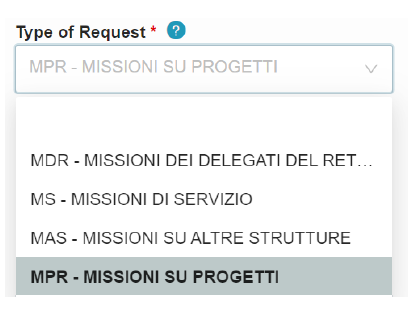
Type of request (“Tipo richiesta”): select “MPR - Missioni su progetti”, which means that your mission will be paid with a research fund.
-
Head of project (“Responsabile progetto”): select “Gianluca Della Vedova”.
-
Project (“Progetto”, or “Fondo di ricerca”): leave this field empty. It will be filled in by the PhD director.

-
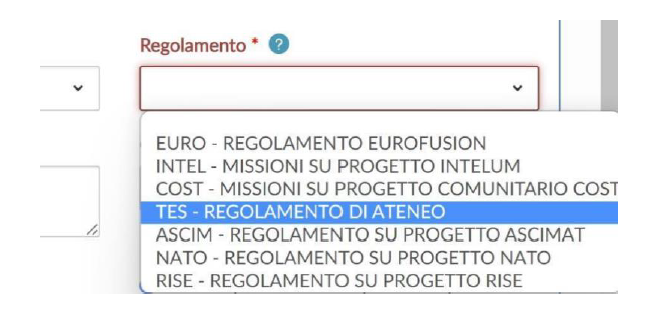
Regulation (“Regolamento”): select “TES - Regolamento di Ateneo” (“University rules”). That means that the University mission rules apply.
-
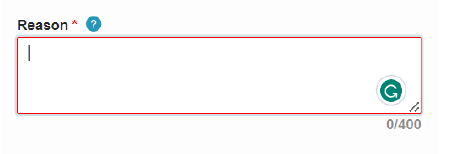
Reason (“Motivazione”): write a clear explanation of the goal of the mission (e.g. “presenting the paper XYZ at the ABC 2026 conference”, or “participation in the XYZ 2026 summer school on Excellent Research”).
-
Description (“Causale”): select the appropriate type of mission. “Ricerca di base” (basic research) is almost always the correct choice.
-
Extraordinary means of travel (“Mezzi straordinari”). The mission rules describe what those are. In short, you will have to fill in this part only if you want to use your own car (which is discouraged anyway).
-
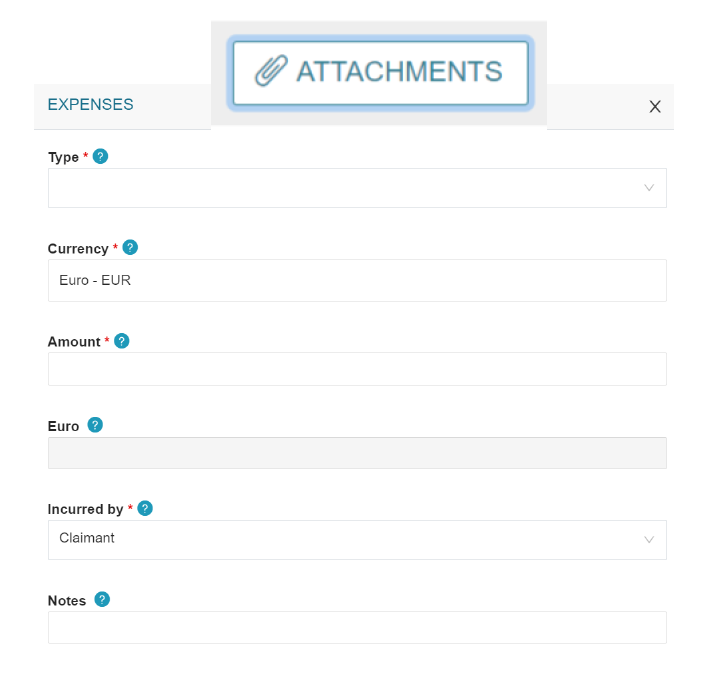
Estimated expenses (“Spese a preventivo”): add the expected expenses, either as a single total or itemized, if you already know the cost of some items (e.g., conference fee, plane ticket).

Prepare an accurate budget that takes into account all possible expenses. If the actual expenses differ greatly from the estimate (either up or down), inform the PhD director once you have been reimbursed, so that your research budget can be updated.
-
Attachments (“Allegati”): upload documents showing that the mission is actually a scientific mission (e.g., the acceptance of your paper, the receipt of the registration fee, an email confirming your registration).
Advance payments (DepotLab)
If you plan sufficiently in advance, the University can pay some of your expenses directly, so that you do not have to advance the money:
- registration fees for conferences, schools, courses and workshops;
- travel and accommodation.
Advance payments made with your research budget must be requested through the DepotLab portal. Administrative procedures can take a long time, so submit your request at least one month before the relevant deadline (for example, the registration deadline of the conference).
Step 0: preliminary checks
- Contact the PhD director to check that the request is suitable and that funds are available.
- Contact the organizers of the conference or school, and tell them that the fee will be paid through a purchase order issued directly by the University.
Step 1: fund authorization
Before you can use DepotLab, you must be authorized to access the fund.
- Ask the PhD director the ID number of the fund to be used.
- Send an email to the department's research support office (Ufficio Supporto Ricerca), with the PhD director in CC, asking to be enabled for the assigned PhD fund to make purchases on DepotLab.
Step 2: access the portal
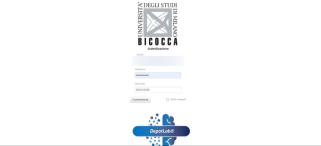
Once your authorization is confirmed, log in to DepotLab with your University credentials.
Step 3: check the supplier
In the “Nuova Rich. Libera” (new free request) section, search for the supplier (that is, the conference or school organizer) by VAT number or name in the “Fornitore” field.
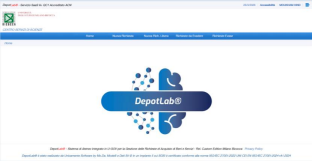
- If the supplier is registered, move to step 4.
- If the supplier is not registered, email the department's research support office and accounting office (Ufficio Contabilità e Amministrazione), asking them to add the supplier. Include the supplier's business name, VAT/tax ID, and address.
Step 4: submit the purchase request
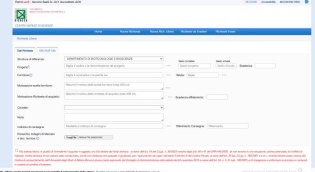
Once the supplier is available and the fund is active, go to “Nuova Rich. Libera” and fill in the mandatory fields:
- Struttura di afferenza: Department of Informatics, Systems and Communication.
- Motivazione (reason): briefly explain why the purchase is necessary for your research.
- Indirizzo di consegna (delivery address): Online.
Tick the box at the bottom (the red text about conflict of interest and responsibility), and submit the request.
Step 5: receive the billing instructions
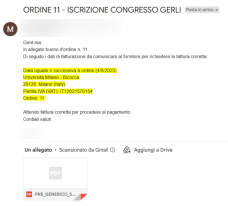
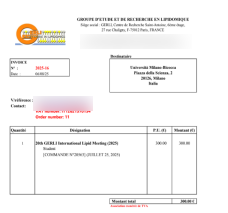
The DepotLab team will send you the billing information (including the order number) that you must forward to the supplier, so that they can issue a correct invoice.
Step 6: finalize the payment
Send the billing details to the supplier. When the supplier sends you the invoice, forward it to the University, which will then pay it.
Travel and accommodation
To have the University pay for your travel and accommodation, first complete step 0 and step 1 above, and submit the mission request in UWeb (see Before the mission). The mission request is needed anyway to be reimbursed for the other expenses, such as meals.
Step 7: authorization form
Ask the department's accounting office for the prior authorization form and fill in all its sections:
- Flights: departure date and time, departure and arrival airports, price, whether you need checked luggage, link to the airline website and screenshots of the selected flights, both outbound and return. Provide the same information for train or ferry tickets, if applicable.
- Hotel: check-in and check-out dates, link to the website where you found the accommodation, and a screenshot of the selected option.
- Your personal details, the location and name of the conference, the link to the event, and the mission number.
Step 8: submit the purchase request
Submit the request in DepotLab as in step 4, with these differences:
- select REGENT INTERNATIONAL S.R.L. (the University's travel agency) as the supplier;
- upload the prior authorization form in the Attachments section (at the top).
Step 9: interaction with the travel agency
The travel agency will contact you for the next steps, and to send you the tickets and the accommodation booking.
After the mission
After the completion of the mission, use the same UWeb system to request the reimbursement of your expenses. The sooner you submit your request, the sooner you will be reimbursed.
- You need acceptable evidence for each expense (e.g., clear and fiscally valid receipts). The PhD director and the Head of the Department authorize the mission, but they do not decide which expenses are reimbursed: the University mission office does. The list of eligible expenses can be found in the Mission rules (Regolamento Missioni).
- Upload the certificate of attendance into UWeb. Otherwise the office has to verify your participation manually, which can significantly delay your reimbursement.
- For archival purposes, send the department's research support office the summary sheet of expenses and all supporting documents uploaded to the portal: tickets, receipts, authorization, expense reports, invitation emails, certificate of attendance, registration fees, etc.
We strongly recommend keeping a single file that tracks, for each mission, the amount requested, the amount still to be reimbursed, and the amount actually credited to your bank account, together with the remaining balance of your research budget. Share it periodically with the PhD director: it makes it easy to check the status of each reimbursement and to keep your budget up to date.
Paper missions
Some missions are handled with a paper form, the mission form (“Incarico di missione”), instead of UWeb. The most common cases are a mission within a mission (you attend a conference during your period abroad) or you want to use your research budget in the last few months of your PhD, just before graduating.
Before the mission:
- At least one week before the mission, fill in section A (“Quadro A”) of the form with your details, the destination, a detailed reason for the mission, the dates and the means of transport. Leave the mission number and the signature blank: the mission number is assigned by the department office, and the signature belongs to the head of project (the PhD director). Always attach a document describing the event, such as the conference flyer or program.
- The head of project tells the department office the code of the project that will pay for the mission.
- When the office receives the form, it assigns the mission number and has the form signed by the Head of the Department.
After the mission:
- Fill in the remaining sections of the form: the departure and arrival dates and times (section C), and the list of travel expenses (“Spese di viaggio”).
- Hand in the form together with the originals of all receipts and supporting documents for your expenses, and the certificate of attendance.
The mission rules also apply to paper missions. The last two pages of the rules summarize the reimbursable expenses, their maximum amounts, and who is entitled to a reimbursement.
For problems and doubts, contact the PhD director. Senior PhD students and the PhD student representatives have already been through this process, and can give you useful tips, especially on which expenses might not be reimbursed. In particular cases, you can also write to assistenzamissioniweb@unimib.it.
The contacts of the department offices can be found in the University organization chart.
Paid Activities
If you want to do any kind of paid activity (teaching labs, exercises, tutorship, work done for companies, etc.), it must be approved by the PhD board. To obtain the approval:
- download the authorization PDF form from the PhD School website, fill it in and sign it;
- fill in the dedicated form and upload the signed PDF;
- wait for the PDF signed by the PhD director;
- send the PDF signed by the PhD director to the PhD office by email (dottorati@unimib.it).
Erasmus funding for your period abroad
PhD students can access Erasmus funding to support their period abroad, that is, the Erasmus scholarship is compatible with the PhD scholarship (“borsa di dottorato”). We support your applications and we believe it is a good opportunity to offset some of the expenses.
Notice that your period abroad needs the approval of the entire PhD board (collegio docenti) before the application deadline; the approval of the PhD director alone is not sufficient.
Obtaining the approval of the PhD board is not immediate. To guarantee that your application is approved, you have to
- fill in the paperwork for your period abroad
- upload your paperwork to get the PhD director's approval of your period abroad
- send the approved paperwork for the period abroad to the PhD office (dottorati@unimib.it)
- send the Erasmus application to the international students’ office, with the date of the PhD board approval of your period abroad.
We are going to have a special meeting of the PhD board for approving your period abroad, but that requires you to send the paperwork for your period abroad to the PhD office (i.e., step 3 above) at least 2 weeks before the deadline. Notice that you do not have to send your Erasmus application 2 weeks in advance. We will inform you of the exact date of the special PhD meeting to approve your period abroad: send us an email if you don’t have that information.
Beware that the PhD board can only approve period abroad applications that have been validated by the university PhD office. This means that applications that reach the PhD office too late might not be approved by the board in time.
Beware also of the eligibility rules. If a student’s scholarship is activated using European funds, including funds indirectly provided by the EU (e.g., the PNRR and PON programs), the student is not eligible for the Erasmus scholarship. This is because the activity funded by the scholarship would be considered double-funded.
Yet, there are some opportunities for the students with scholarships activated using European funds. In particular:
Students can still apply to Erasmus Traineeship calls. In fact, the scholarship provided as an outcome of the call consists of two components: the first component derives from the EU and the second component derives from UNIMIB’s funds. Students with scholarships activated using European funds cannot benefit from the first component (the one that derives from the EU), but can benefit from the second component, the one that derives from UNIMIB’s funds. The amount of that component depends on the income (ISEE) of the student. The application process is the same in all cases; the only difference is in the outcome: students with scholarships activated on EU funds are assigned the second component only, while the rest of the students can benefit from both components.
All students, including the ones with scholarships activated with EU funds, can apply to the Exchange Extra EU calls, since these are calls entirely funded by UNIMIB.
If in doubt, contact the relevant office.
Courses, exams, activities, thesis
Choosing your supervisor
Soon after the beginning of the PhD each student must choose their supervisor(s) who will be in charge of supervising the professional and scientific growth of the student. The choice of the supervisor has to be approved by the PhD board.
We expect each PhD student to continuously update the supervisor on the progress of the PhD studies, including deciding the teaching plan, and all other activities.
The supervisor must be a professor (full, associate, or tenure-track assistant) of Computer Science at the University of Milano-Bicocca.
You might also have one or two co-supervisors, without any restriction on their affiliation (for example, a professor of another university, or a researcher in a research institute or in an R&D lab of a company), provided they have the scientific background needed to supervise the planned research.
The choice of the supervisor and the co-supervisors must be communicated using the dedicated form.
You can change your (co)supervisor choice by using the same form. All changes must be approved by the PhD board to take effect.
Courses
You must obtain at least 8 ECTS from disciplinary courses and 3 ECTS from interdisciplinary courses. Each disciplinary course consists of 2 ECTS. The first year courses are at the beginning of the academic year (November-March). We expect each student to obtain at least 6 ECTS by April of the first year, so that they can dedicate themselves almost entirely to research after that.
We want to monitor your progress in completing the coursework, not to evaluate or control your work, but rather to identify potential difficulties as early as possible and provide support when needed. For this reason, you have to fill in the following PhD Student Progress form every 3 months (end of March, June, September, December).
Period abroad
During your PhD studies, you have to spend a research period in foreign universities or research institutes for at least 6 months. You can split this duration over different stays, also in different institutions. Students with industrial positions (alto apprendistato) might be exempted or have their requirement reduced. Students hired on specific programs might have different rules. Your period abroad must be approved by the PhD board before you leave; the approval must be requested via the dedicated form, uploading the “Request for Training Abroad” form available in the PhD School website.
Planning for your period abroad takes some time. You and your supervisor must agree on the host institution, the hosting researcher, the time and scope of the period abroad. Every aspect must also be agreed with the host researcher, including the intellectual property aspects.
Once your period abroad has been approved by the PhD director, you have to send it to the PhD office. This step is essential to receive the 50% increase of your fellowship.
If you want to apply for the Erasmus Traineeship program, you have to request the authorization for your period abroad at least 4 weeks before the deadline of the Erasmus Traineeship call.
Expected results
This section provides some results that are typically achieved by a PhD student, as a reference. Beware that they are neither hard requirements nor a stamp of approval. Research is largely unpredictable, and every PhD work has its own specific development along the three years. Always refer to your supervisor(s), tutor, the members of the PhD board, and the PhD director to properly assess your research work in the context of the PhD studies.
End of the first year: Definition of the problem to be solved in the student’s research; justification of why this problem is important, clear evidence that previous research and related work has not yet solved that problem. Publications: workshop/doctoral symposium paper or presentation.
End of the second year: Definition of the problem to be solved in the student’s research; justification of why this problem is important, clear evidence that previous research and related work has not yet solved that problem. The research hypothesis or claim, and the expected contributions of the thesis. Intermediate research results. Publications: a conference or journal paper with the preliminary results, maybe on a related, but simpler, research problem.
End of the PhD: Definition of the problem to be solved in the student’s research; justification of why this problem is important, clear evidence that previous research and related work has not yet solved that problem. The research hypothesis or claim, and the contributions of the thesis. Clear evidence of the relevance of the contributions. Publications: a top conference/journal paper with the final results of the research.
Industrial PhD positions: these positions may generate patents and fewer publications. In all cases, publishing at least a conference/journal paper about the research work done is strongly recommended.
Publications: due to the length of the review processes, especially for journals, the expected result can also be interpreted in terms of the submission of the paper, and not necessarily its publication.
End-of-year presentation
If you cannot participate in the PhD day, or your poster does not show adequate progress in your PhD studies, or your annual report does not show adequate progress in your PhD studies, then you will have to give a PhD talk to clearly describe the current status of your studies.
Only after that presentation, the board will decide whether you can advance to the next year or be allowed to defend your thesis. We strongly suggest that you send your presentation to your tutor sufficiently in advance, so that you can incorporate the suggestions you will receive. The usual format of those presentations is the following.
First year students (usually 10 mins presentation and 5 mins for questions)
Main focus of the presentation
- The problem to be solved in the student’s research; justify why this problem is important and make clear that previous research and related work has not yet solved that problem.
Additional information (final part of the presentation)
- Expected publication venues
- Publications (if any)
- Courses taken and planned
- Name of your supervisor(s)
Second year students (usually 20 mins presentation and 10 mins for questions)
Main focus of the presentation
- The problem to be solved in the student’s research; justify why this problem is important and make clear that previous research and related work has not yet solved that problem;
- The research hypothesis or claim,
- The expected contributions of the research,
- How the student plans to evaluate the results and to present credible evidence of the results to the community,
- A description of the results achieved so far,
- The planned timeline for completion.
Additional information (final part of the presentation)
- Expected publication venues
- Publications
- Courses taken and planned
- Plans for your period abroad
- Thesis title proposal
Third year students (usually 20 mins presentation and 10 mins for questions)
Main focus of the presentation
- The problem attacked in the student’s research; justify why this problem is important and make clear that previous research and related work has not yet solved that problem;
- The research hypothesis or claim,
- The contributions of the research,
- A description of the results achieved so far, and of their relevance in the scientific field
Additional information (final part of the presentation)
- Publications